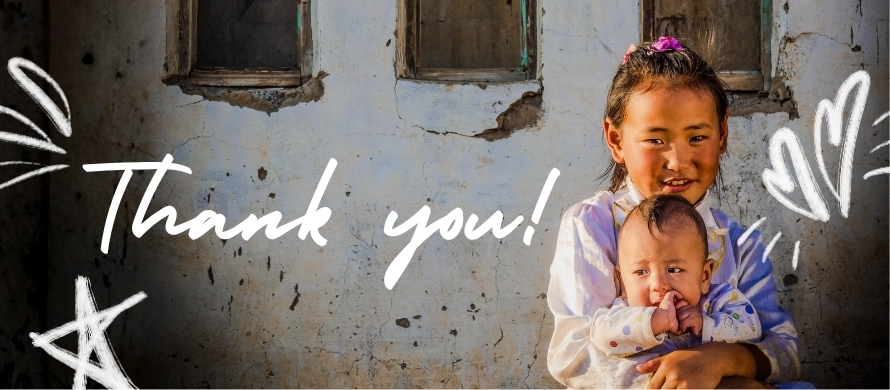
A big THANK YOU to our donors who contributed to improving the lives of these children and their families last year!
Here are highlights of the impact you’ve created:
Hope in the Villages
- 218 students and 7 classrooms in the West Bank were given learning tools, furniture and safe play areas to support their educational needs.
- 20 classrooms in Nepal had polyfloss roofs installed for warmth and safety.
- 1,644 children in Malawi now have access to clean and safe drinking water.
- 1 solar-powered borehole was drilled in Malawi, providing clean water to 2,221 villagers.
- 1 water committee with 18 members in Malawi was established and trained to manage and maintain water systems.
- 173 mothers in 10 communities in the West Bank significantly improved their child-nurturing practices for their infants such as breastfeeding.
- 291 households in Ethiopia received clean cookstoves, protecting their health and the environment.
- 578 hectares of degraded land in Ethiopia were restored, enhancing food security and protecting the environment.
- 322 households in Ethiopia received training and were equipped with fruit and vegetable seedlings to grow their own food.
- 25 goats were given to 12 families in Sindhuli, Nepal as livestock support including training on goat-raising, shedding management, and capacity-building sessions to improve their livelihood.
- 47 community members in Nepal were empowered with training (e.g. segregating types of plastic, operating machinery, packing, sewing), creating employment opportunities for them.
- 25,000 Abaca seedlings were provided to farmers in North Cotabato, Philippines, boosting farming livelihoods.
- An existing Abaca nursery continues to be fully utilised by farmers to support their needs and plans to establish new Abaca nurseries are underway in North Cotabato, Philippines.
- 65 families in North Cotabato, Philippines were trained to produce Abaca products, helping them earn a stable income.
- 10 Abaca machines (e.g. twinning and stripping) were provided to farmers in North Cotabato, Philippines to help them produce and sell eco-friendly products.
Faith in Action
- 910 parents in Mongolia were trained in positive parenting, creating safe and loving homes for their children.
- 150 faith-leaders in Wazirpur, Bangladesh participated in holistic Child Well-Being (CWB) trainings to prevent gender-based violence against children.
- 450 children in Musosolokwe, Zambia benefitted in activities that enhances spiritual nurture of children. The proportion of children who can express their faith increased from 13% to 87%.
- 65 church and community leader in Cambodia have received training to tackle mindsets that harm children in their communities.
Fund A Village Entrepreneur
- Ms Lae from Myanmar received the microloan she needed to purchase resources to expand her tailoring as well as her grocery shop business. Her daughter is learning to sew through the family tailoring business.
- Ms Aye from Myanmar received the microloan she needed to grow watercress on 1 acre of farmland, which she managed to harvest and sell. Her growing income has helped keep her children in school and allowed them to buy new uniforms.
- Ms Thin from Vietnam received the microloan she needed to rehabilitate 1 hectare of bamboo forest for bamboo farming. Her family is able to earn an additional income of up to VND 2.5 million (approx. SGD 122) through harvesting and selling bamboo shoots.
- Ms Chung from Vietnam received the microloan she needed to raise pigs to support her granddaughter with special needs. The family recently managed to sell batch of 8 pigs through their pig farming, earning around VND 40 million (approx. SGD 1,960).
- Ms Lam from Vietnam received the microloan she needed to purchase resources to construct a new house for her family. She has finished building the house and her whole family is now able to live in a safe, protected environment.
Crisis & Disaster Response
- Over 33,000 people affected by the escalating crisis in the Middle East received cash and voucher assistance to purchase essential items.
- Over 8,000 children and family members affected by the escalating crisis in the Middle East received psychosocial support.
- 268 conflict-affected children in Afghanistan and Philippines received child protection services, keeping them safe from abuse and violence.
- In the Philippines, 110 crisis-affected individuals received skills training and over 500 individuals were referred to livelihood opportunities.
- In Bhasan Char, Bangladesh, over 100 Rohingya refugees received training and resources to start Moringa farming as a source of livelihood and nutrition.
- 485 malnourished children in Sudan received early identification and treatment referral.
- 120 malnourished and displaced households in Sudan received an urgent 3-month food supply.
- 535 hungry and drought-affected households in Afghanistan received 4-month food supply.
- 2 static healthcare facilities were established in Afghanistan to enable access to essential healthcare for over 57,500 conflict-affected persons.
- 2 specialist outpatient clinics in Afghanistan were equipped to treat severely malnourished children.
- 2 hospitals in war-torn areas in Afghanistan were upgraded with prenatal and hygiene facilities.
- 166 conflict-affected children with disability in Iraq have been enrolled into remedial education.
- 6,497 conflict-affected students in Mindanao, Philippines received essential school supplies.
- 10 conflict-affected schools in Mindanao, Philippines equipped with resources to support slow learners.
- 10 schools in Mindanao, Philippines were equipped with essential disaster survival supplies to strengthen their preparedness and resilience.
- 172 business microloans were disbursed to conflict-affected individuals, particularly women, enabling them to sustain their family livelihoods.
- 108 agriculture microloans were disbursed to small farmers in Myanmar, enabling the community to fight conflict-driven food insecurity.
- 73 malnourished Rohingya refugee families in Bhasan Char, Bangladesh, received Moringa supplements to improve their nutrition.
- 218 latrines and 144 bathing spaces were rehabilitated to provide better sanitation facilities for Rohingya refugees in Bhasan Char, Bangladesh.
Tackle Urban Poverty
- 34 out-of-school children in Bangladesh completed a Non-Formal Education programme, helping them leave child labour and re-enter school.
- 60 child labourers and street children in Bangladesh received health check-ups and medical treatment.
- 840 vulnerable children and parents were reached on key child labour issues and 3 round-table dialogue sessions were held to engage government and non-governmental stakeholders on child labour in Bangladesh.
- 20 women in Nepal gained tailoring skills, empowering their families to start a small business and keep their children out of labour.
- 119 parents from poor families in Nepal were trained in financial literacy and 41 new savings accounts have been opened thus far.
- 152 parents in Nepal were trained to create safe and non-violent home environments for their families.
- 132 school kits were distributed to children in Nepal, helping to ensure they can attend school.
- 1 mobile library serving slum communities in the Philippines was maintained and equipped with learning materials.
- 302 children living in slum-areas in the Philippines received mentored reading sessions, boosting their literacy.
- 116 community volunteers and educators in the Philippines were trained in child literacy to teach children in slums.
- 128 vulnerable youths in Bangladesh underwent vocational training to gain employment, empowering them to choose non-hazardous and non-exploitative labour.
- 23 new at-risk youths in Bangladesh underwent vocational training to gain employment, empowering them to choose non-hazardous and non-exploitative labour.
- 66 out-of-school youths in the Philippines are receiving ongoing support in job readiness and vocational training.
- 113 families in Mandaue City, Philippines were equipped with knowledge on vegetable production and trained to grow their own home gardens.
- 171 malnourished children in slums in the Philippines benefitted from feeding programmes and/or family nutrition education programmes to improve their health status.
- 115 malnourished children in slums in the Philippines received immunisations and essential vitamins.
- 9,641 preschoolers in Vietnam were educated on personal hygiene to prevent Hand, Foot, and Mouth Disease.
- 9 handwashing facilities were installed or repaired across urban poor schools in Vietnam, providing 9,429 children with access to proper sanitation and hygiene.
- 501 waste segregation bins as well as waste classification and segregation training were provided to slums and schools in Vietnam to improve the waste management system in urban-poor areas, reducing contamination and the spread of infectious diseases.
- 1 more broken wastewater system in Vietnam was repaired, improving sanitation access for 13,598 adults and 2,477 children.
Support Local
- 35 children with special learning needs living in children's homes in Singapore received access to learning support programmes.
Pledges to
- Tackle Urban Poverty – 207,851 urban poor people, including children, from Bangladesh, Cambodia, Philippines, and Vietnam have been reached, enabling them to be well-nourished, educated, and empowered to live safe and productive lives.
- Crisis & Disaster Response – 406,639 people living in fragile places like Afghanistan, Bangladesh, Lebanon, Philippines, South Sudan, and Syria, have been supported to survive, recover, and build a future,* and 1,268,968 people around the world have been protected before, during, and after disasters.*
- Fight Climate Change – 232,367 people vulnerable to climate change in Ethiopia, Nepal, and Philippines, have been supported to strengthen their resilience and improve their environments.
*Achievements indicated were a result of the collective support from World Vision offices and donors around the world, including World Vision Singapore.