

When the devastating flash floods swept through Nuwakot on 26th of August, lives changed within moments, it left no time for families to think, plan or prepare. Within minutes, homes disappeared, livelihoods were destroyed, and hundreds of people were forced to run for safety.
Among them were Urmila, a pregnant mother of two, and Suveksha, a Grade 12 student whose dreams for the future were suddenly thrown into uncertainty. Though their experiences were different, both young women faced the same reality: surviving a disaster that changed their lives in an instant.
Among the families forced to flee was Urmila, a pregnant mother of two living in a rented house near the river. For Urmila, the flood was a race against time. As soon as she realised the water was approaching, she grabbed her two young sons and ran with other community members towards higher ground. Living in a rented room near the river, she had no chance to collect belongings or important documents.
“I started running with my kids, but I could not take out anything else. Our citizenship and birth certificates were all left there,” said Urmila.
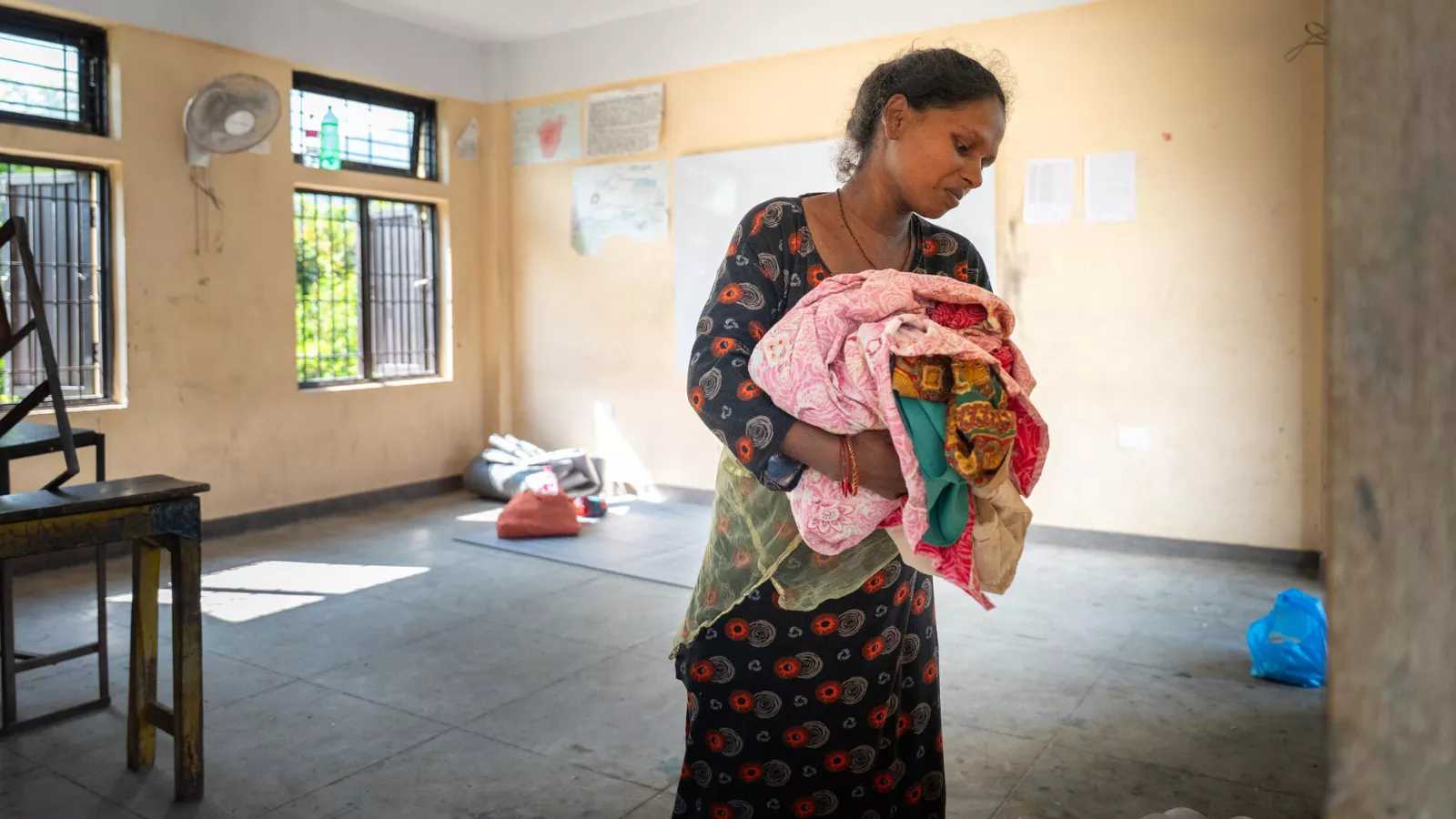
Urmila sorts through her clothes at a temporary evacuation centre in Nuwakot
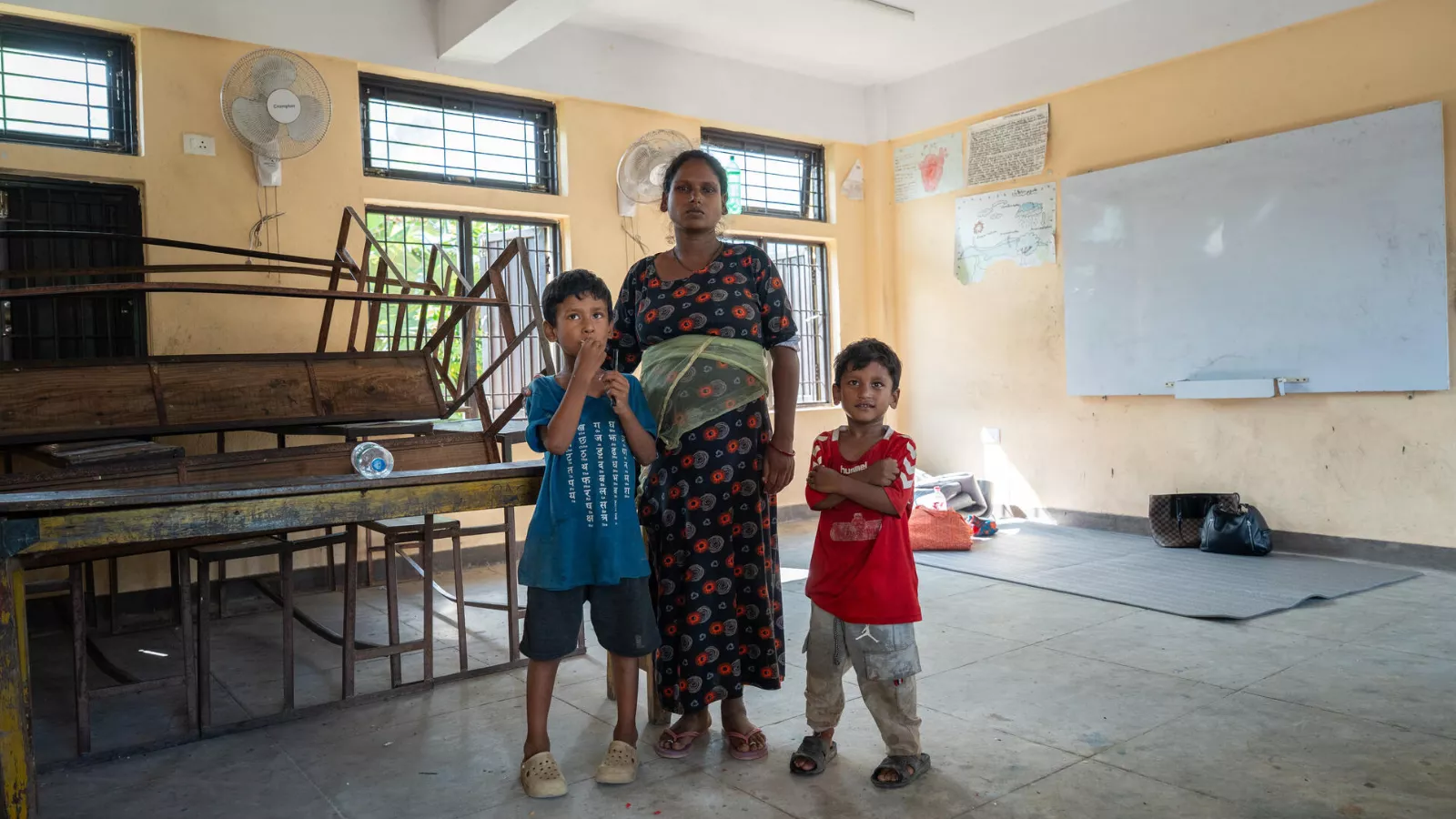
Urmila with her two sons at a temporary evacuation centre in Nuwakot
While the family survived, the emotional impact of the disaster continued long after the waters receded. At the time of the flood, Urmila's husband was working across the river in Bidur. With communication systems disrupted, she spent days caring for her children without knowing whether he was alive. The uncertainty became even more difficult because Urmila is pregnant. Displaced from her home and living in a temporary evacuation center, she worried about how she would access healthcare and support if complications arose.
“Here, they only provide food and shelter. But if I were to go into labour pain, I would need my husband with me. I kept wondering who would look after me,” said Urmila.
For women, children, and vulnerable families, emergencies often create risks that go beyond the immediate danger of the disaster itself. Access to healthcare, maternal services, hygiene supplies, and safe living conditions becomes critical in protecting health and wellbeing. Urmila's concerns reflected the challenges many displaced families faced as they tried to meet their basic needs while coping with uncertainty.
At the same evacuation site 18-year-old Suveksha was trying to make sense of a different kind of loss. Before the disaster, her family depended on a small shop attached to their house. The business supported everyday household expenses. When the flood came, both the shop and the house disappeared.
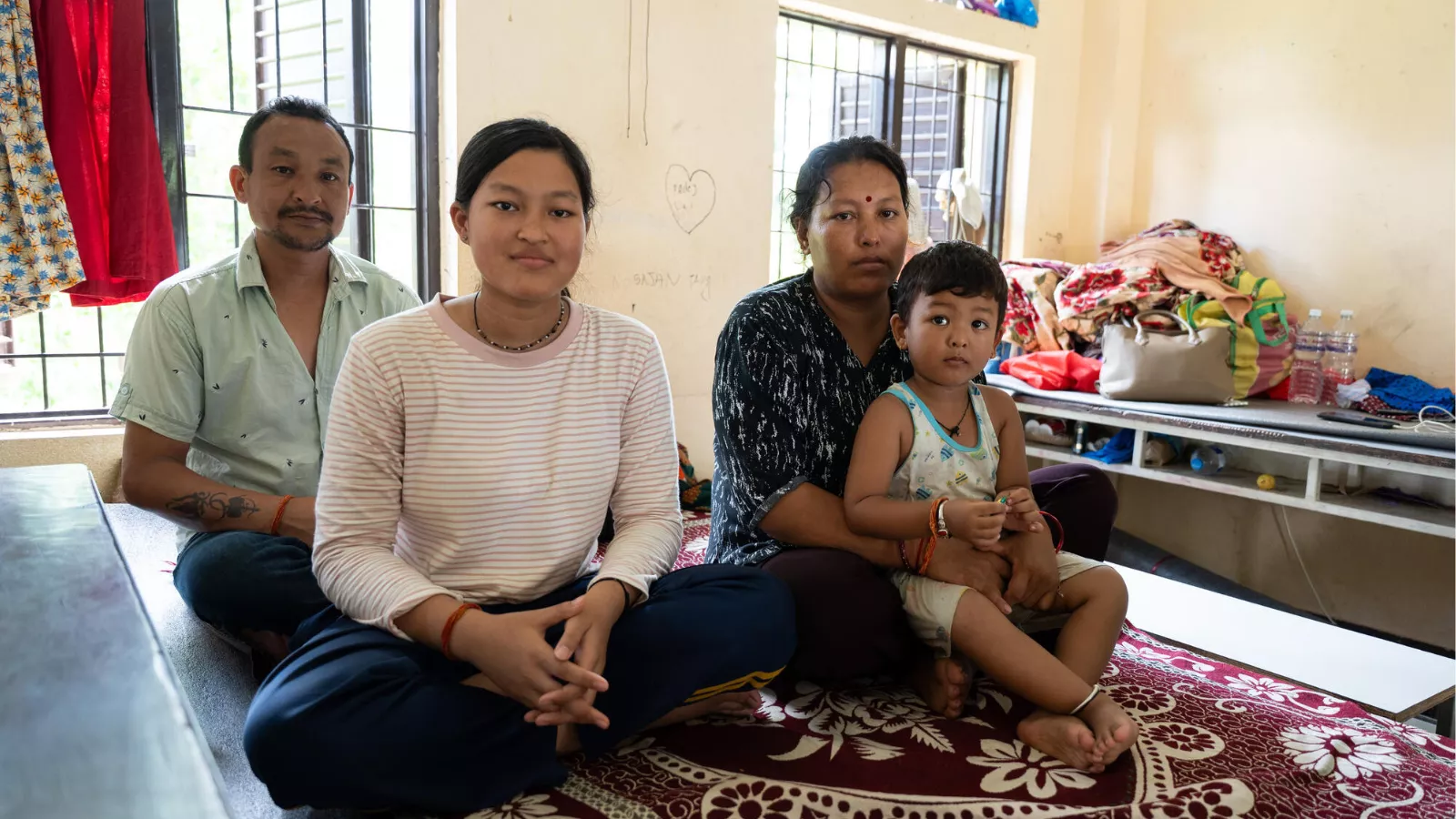
Suvekcha, her family and her 3-year-old brother at an evacuation centre in Nuwakot
“We had a small shop in our house. And all our expenses were handled with the income of that shop. That is also gone. Our home is also gone. This hurts me a lot.” said Suveksha.
Earlier that morning, Suveksha had been at Tribhuvan Trishuli Secondary School. When Principal Rajendra Dawadi and the teachers recognised the seriousness of the approaching flood, they acted quickly and sent students home. The school had approximately 1,600 students enrolled, with around 900 reportedly on campus when the warning came. Incoming school buses were also redirected away from the danger.
“There were 1,600 students in our school. Our teachers even forgot about their own lives and made sure we got home safely. They risked their lives to help us. Our Principal, Rajendra Sir, and all our teachers helped us. They acted quickly and made sure students could get home safely,” Suveksha recalled.
By the time the flood reached her community, Suveksha had returned home and was with her father and aunt. Her mother and younger brother were at the family shop. Both groups managed to leave their respective locations and reach higher ground with only minutes to spare.
“Just a five-minute difference is what saved our family,” said Suveksha.
Despite everything, Suveksha remains grateful that her family escaped.
Today, both Urmila and Suveksha are staying at a school which has become a temporary shelter for families displaced by the flood. There, they have received support including food, clothing, shelter, and essential supplies.
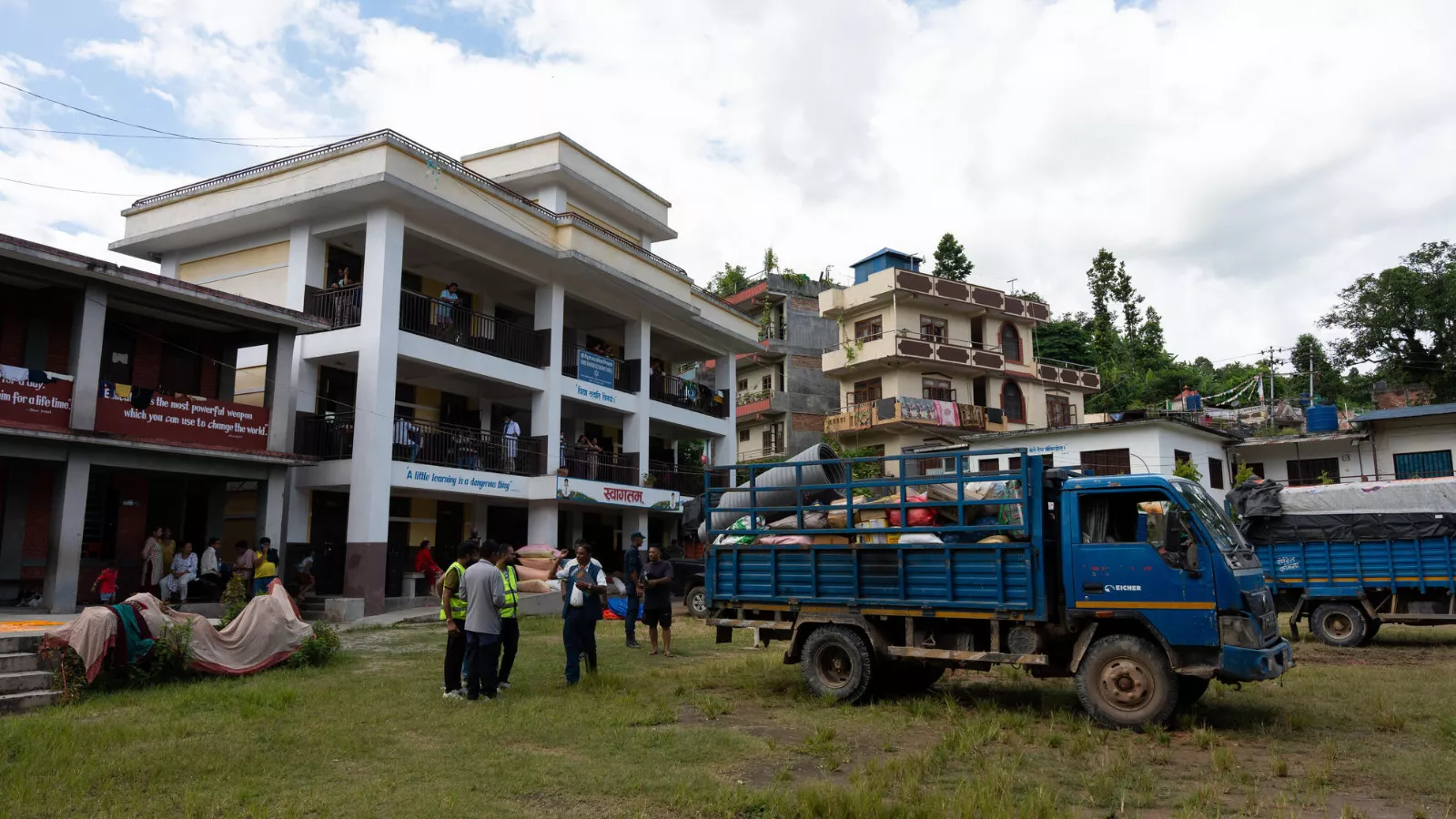
A school in Nuwakot which has become a temporary shelter for families displaced by the flood
Yet recovery will take time.
For Urmila, rebuilding means ensuring her children remain healthy and safe while preparing for the birth of her baby. For Suveksha, it means hoping that schools, homes, roads and livelihoods can be restored so she can continue her education and pursue her dreams.
Their experiences are a reminder that disasters affect women and girls in unique ways. Along with losing homes and livelihoods, many face increased challenges related to health, protection, caregiving responsibilities, access to essential services, and the disruption of education. But behind every loss is a family trying to protect one another and find hope amid uncertainty.
World Vision's Response
In response to the devastating Nepal flash floods, World Vision International Nepal is working closely with government authorities, local partners, and humanitarian actors to support affected children and families.
During the emergency response phase, World Vision aims to reach 25,000 people from 5,000 households, including 10,000 children, with life-saving assistance such as emergency food support, temporary shelter, essential household items, water, sanitation and hygiene services, and protection support. Assistance is being coordinated with relevant stakeholders to ensure it reaches families in a timely, accountable, and needs-based manner.
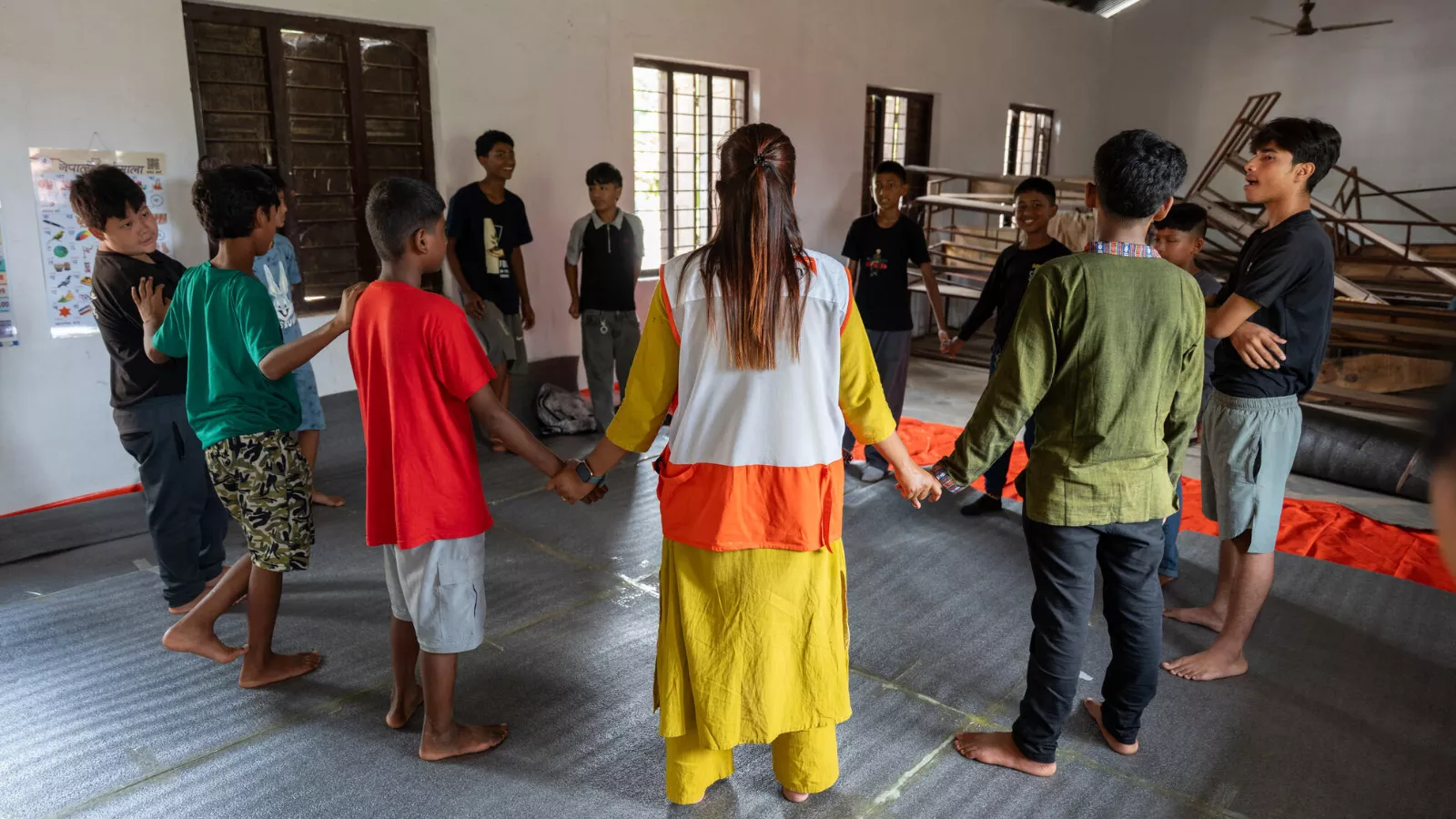
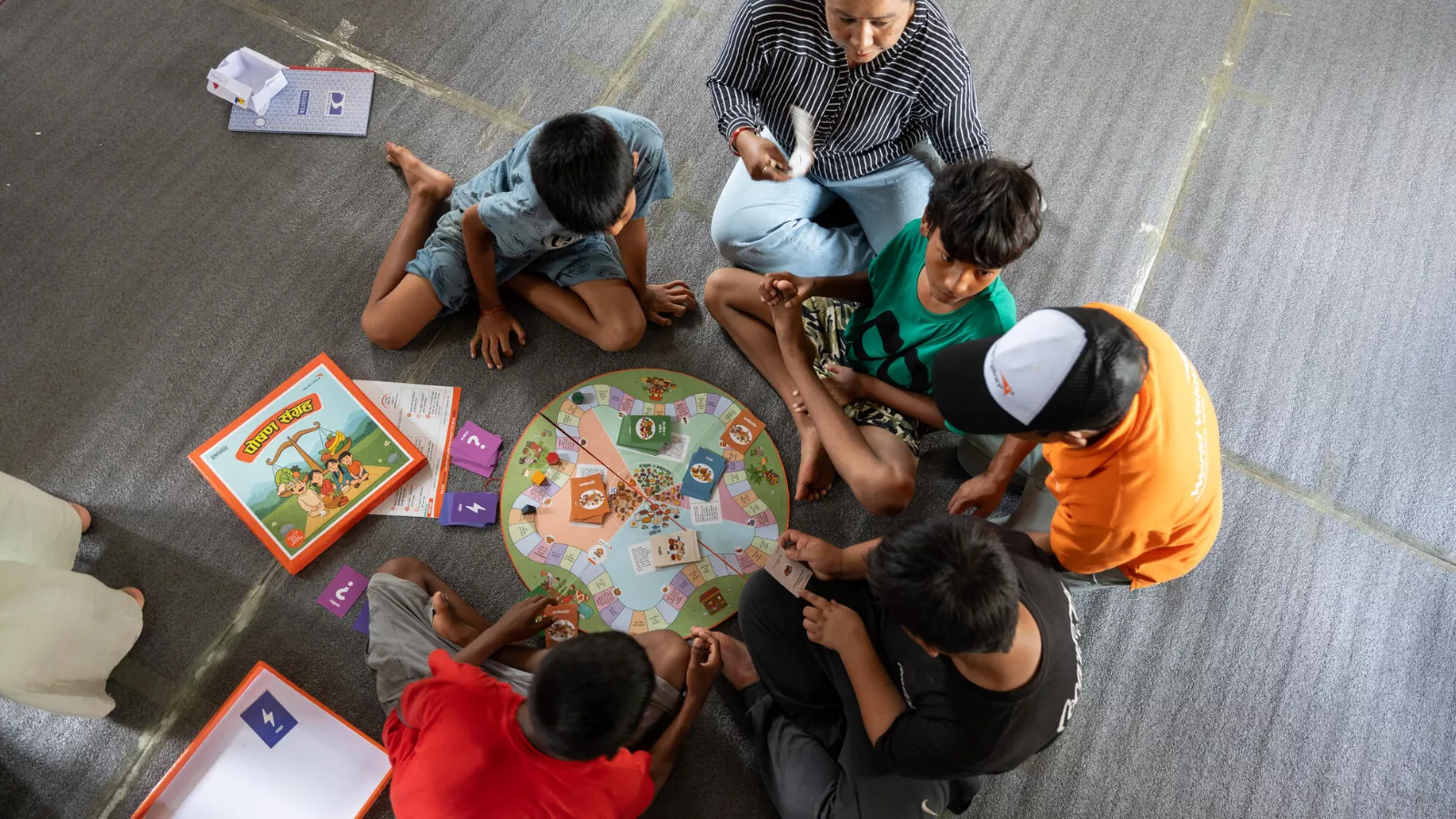
Recognising that children are often among the most affected during emergencies, World Vision is also establishing Child Friendly Spaces where children can access safe, supportive environments, play, and receive psychosocial support as they begin to recover from the trauma of the disaster. While immediate relief is critical, recovery extends far beyond the first days and weeks after a disaster.
Through the early recovery and rehabilitation phase, World Vision plans to support 20,000 people, including 8,000 children, as families work to restore livelihoods, reconnect with essential services, and rebuild a sense of safety and stability. Efforts will also help children return to learning and support families as they cope with the emotional and social impacts of the flood.
Your support can help children and families affected by the floods get through the days ahead and rebuild their lives. Support World Vision's Nepal Flash Floods Response.


